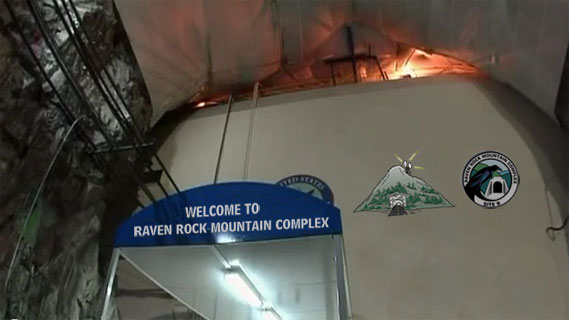
About the Raven Rock Mountain Complex
The Raven Rock Mountain Complex is known by many names:
BACKGROUNDIn 1950, President
Harry S. Truman approved the construction of a deep underground facility that could be used as a
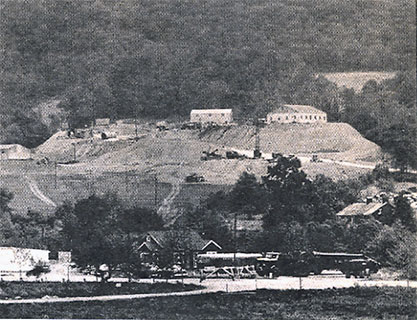
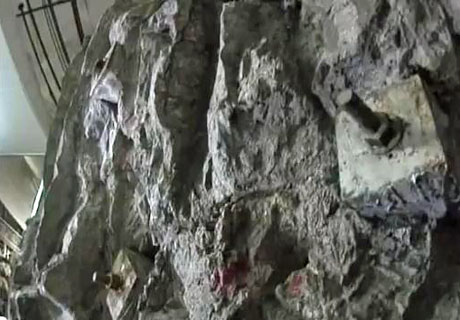
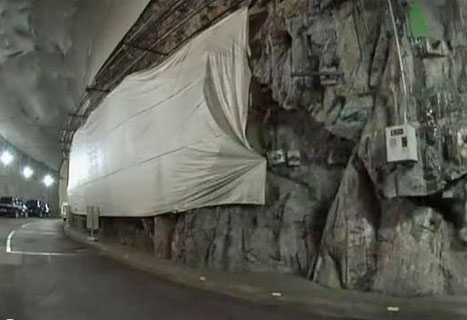
relocation site for the Pentagon in times of national emergency. One half million cubic yards of superhard greenstone granite
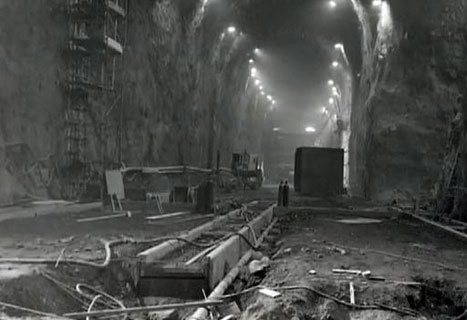
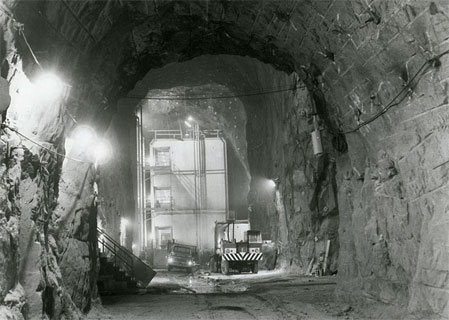
rock was secretly blasted out and hauled away in ten months. Five separate 3-story buildings were built deep inside the Raven Rock mountain
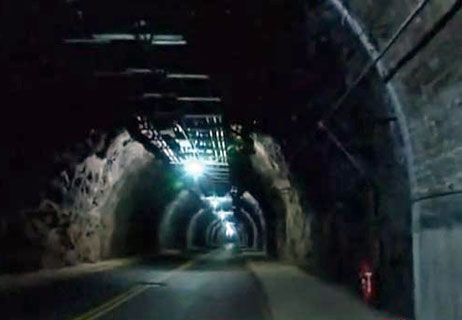
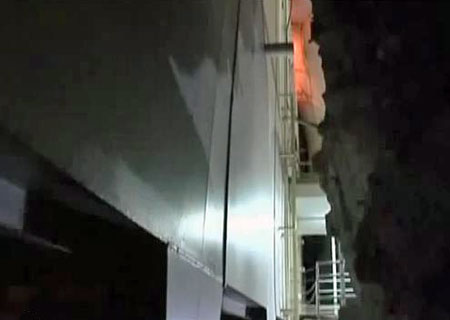
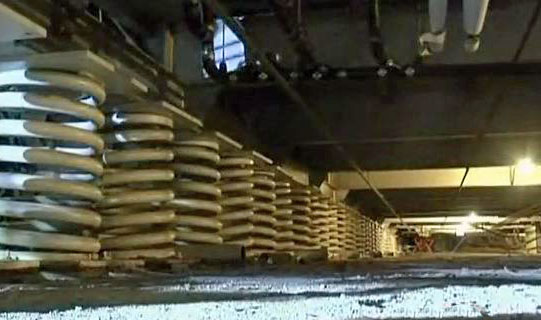
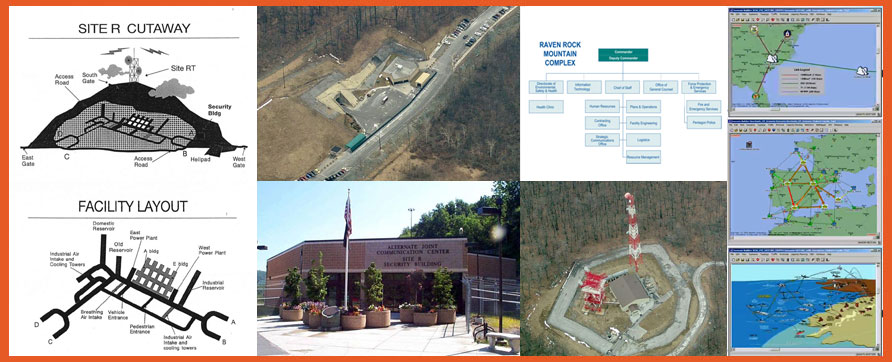
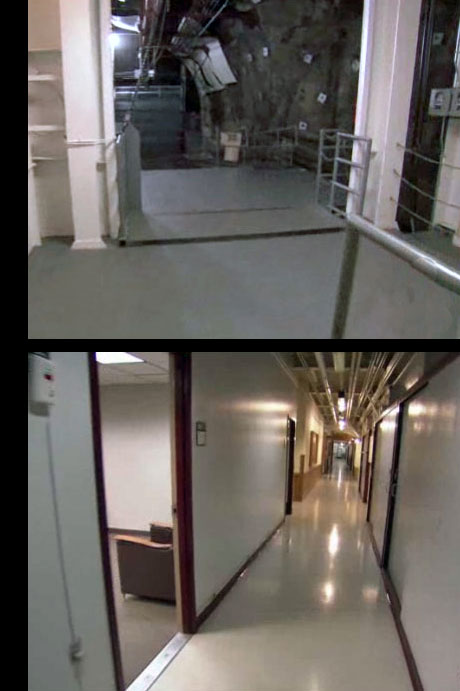
located on the Pennsylvania-Maryland border. In addition to the basic life support requirements of power, water, and air, the underground metropolis also contains a medical and dental clinic, fire department, post office, dining facility, snack bar, dormitories, chapel, barbershop, fitness center, bowling alley, and even a Starbucks. View the map of Site R.
PRESENT DAYThe primary mission of the Raven Rock Mountain
Complex is to support the Continuity of Operations Plan (COOP) for
the Office of the Secretary of Defense and the Joint Staff.
Site-R is capable of serving as a backup to the Pentagon
with state-of-the-art technology, worldwide secure network connections, emergency operations centers, and relocation space for
all of the major components within the Department of Defense along with some other federal agencies.
SITE R WEBCAM - LIVE VIEW OF THE RAVEN ROCK COMMAND CENTER
HOW THE PENTAGON RELOCATES TO SITE RPlease note: Hasty Access procedures are used to expedite the arrival of personnel involved in an actual relocation or relocation exercise. Personnel arriving via helicopter follow Blue Light and Iron Gate procedures. All entry procedures for personnel, contractors, and guests are defined in USAG Raven Rock Regulation 380-1.
RAVEN ROCK MOUNTAIN COMPLEX PHOTO GALLERY

This is a parody website with fictional content and fake photos. No person,
department, or agency of the U.S. Government approved, endorsed, or authorized
this site. This website is not associated in any way with the Raven Rock
Mountain Complex (if there even is such a place ...) and unfortunately, no public tours are
available.
|
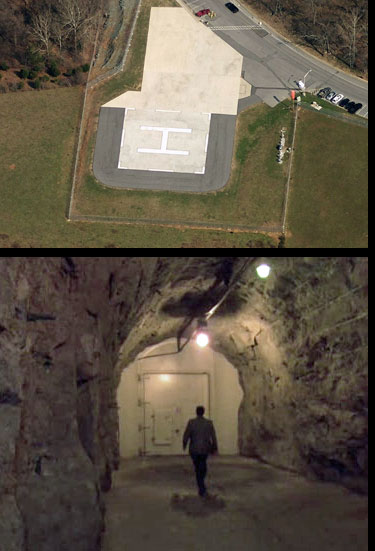 Our motto is "Ready Always Period". Full-scale COOP exercises are held periodically and require the overnight and multi-day relocation of hundreds of DOD personnel to Site R. Senior leaders flown in
by helicopter from the Pentagon and DOD emergency relocation teams all participate in real-life scenarios which test the alert and notification procedures along
with the reception, staging, onward movement, and integration (RSOI) procedures. These include the COOP transportation plans,
Site R hasty access procedures, and the integration of mission essential functions within the operating routine of the alternate site, the backup Pentagon.
Our motto is "Ready Always Period". Full-scale COOP exercises are held periodically and require the overnight and multi-day relocation of hundreds of DOD personnel to Site R. Senior leaders flown in
by helicopter from the Pentagon and DOD emergency relocation teams all participate in real-life scenarios which test the alert and notification procedures along
with the reception, staging, onward movement, and integration (RSOI) procedures. These include the COOP transportation plans,
Site R hasty access procedures, and the integration of mission essential functions within the operating routine of the alternate site, the backup Pentagon.